
Gareth Nelson Award
This award honours Professor Gareth Nelson, who throughout his career made a significant contribution to the theory and practice of phylogenetic systematics and historical biogeography. His career was largely at the American Museum of Natural History where he was curator of fishes. After retirement he moved to Australia as an honorary professor in the School of Botany, The University of Melbourne, where he published joint papers with his wife, botanist Professor Pauline Ladiges, and mentored students. He became a member of ASBS.
Eligible applicants for the Gareth Nelson Award must be postgraduate students and early career postdoctoral botanists who are current financial members of ASBS and their research project should contribute to systematic botany and biogeography (including land plants, algae, and fungi) within Australasia.
One round of applications is offered each year, closing on September 14. These applications use the same application form as Hansjörg Eichler Grants and applicants will simultaneously be considered for both awards.
Grant Details
Aim
This grant aims to support research in systematic botany and the career development of ASBS postgraduate students and early career members by providing funds for specific research projects.
For the purpose of this fund, Australasia is defined as the area including Australia, New Zealand, New Guinea (including Papua New Guinea and Irian Jaya), and the islands of Melanesia (including Fiji, Vanuatu, the Solomon Islands, and New Caledonia).
Eligibility
Grants are open to applicants who meet the following criteria:
- The applicant is a current financial member of the Australasian Systematic Botany Society and is a postgraduate student or early career postdoctoral botanist (within five years of PhD completion, with allowances made for career interruptions).
- The project contributes to Australian systematic botany and biogeography (including land plants, algae, and fungi). The Australian Tax Office (ATO) confirms that projects that demonstrate an impact on understanding the flora of Australasia (as defined under the Aim) are eligible regardless of where the work is undertaken or the taxonomic group involved.
- The applicant is attached to an Australasian research institute (in the very broadest sense, including herbaria, universities, and government agencies). Students not formally registered or attached to an Australasian institution may provide evidence in the form of a collaboration letter signed by a researcher based in an Australasian institution.
- The project is approved by an appropriate manager or director, and in the case of students, also by a supervisor.
- The project must be carried out within Australasia (see definition provided at the top of this page).
- Awardees cannot hold an Hansjörg Eichler Research Grant or a Gareth Nelson Award at the same time or during candidature for the same postgraduate course.
Size and duration of grants
The maximum grant awarded will be A$5000.
The maximum amount available for all grants in any one year will be determined by ASBS Council before applications are called. The Research Committee may decide to make one or more awards in a particular round. If no proposal is of a suitably high standard, no grant will be made in that round.
Some examples of project costs that can be funded by this grant include consumables, travel and other costs associated with fieldwork, contracted services such as DNA sequencing, etc.
Institutional overheads, large capital items, the publication of journals and books, and the attendance at research conferences cannot be funded by this grant.
Timing
Grant applications will close on 14 September each year. Funding for successful applicants will commence generally in November after the completion of necessary agreements. Successful applicants are published in the ASBS newsletter in December.
Assessment criteria
Applications will be assessed on the quality of the applicant and the proposed project. Applications will be judged on: research track record of the applicant, relative to opportunity (40%); merit and planning of the research project (40%); and value for money (20%), which includes the value of the grant in supporting the activities of the recipient, and the nature of additional research the grant will facilitate.
Guidelines for completing your application
The Gareth Nelson Research Award grants are competitive. Proposals are viewed against other submitted proposals. Therefore, applicants should prepare their proposals carefully and completely.
The following will be taken into account in assessing proposals:
- The academic standing of the applicant, including brief personal details, academic record (undergraduate as well as postgraduate, including honours awarded), and institution where the project will be carried out.
- Evidence of the applicant’s ability to carry out the project, such as relevant experience with the techniques, previous experience in carrying out research and any publications (published or accepted only). In cases of excessive completion times for previous projects and/or study programmes, or failure to achieve reasonable outputs (e.g. publications), justification should be provided.
- A project that is clearly defined in scope and will preferably result in a publication. For those applicants applying for funding for work which is part of a larger project, such as a PhD, preference will be given to those applications which specify a particular, well circumscribed part of the project which will be wholly funded by the grant.
- The scientific and/or theoretical merit of the proposal and the likelihood that it will make a worthwhile contribution to Australasian systematic botany.
- Details on how the project specifically addresses any strategic actions in the decadal plan for biosystematics and taxonomy in Australasia.
- Identification and proper budgeting of the particular aspect of the project that funding will make possible, rather than a request for partial support of a large project. Preference will be given to applications that request funding to enable the extension of a project into some new and worthwhile area.
- The feasibility of the project being carried out within the proposed timetable and with the available resources.
- The soundness of the proposed methodology and planning of the work schedule. A brief yet sufficiently detailed justification of the selected method should be included to allow assessment of its suitability, as well as an appreciation of the applicant’s knowledge of its strengths and weaknesses.
- References and a publication list may be attached to provide additional information.
For details of other types of research projects that have been funded in the past, please see the list of Previous Recipients below.
Grant conditions
Recipients and their institutions must be able to agree to our standard grant conditions.
Within 12 months of the grant being issued, recipients must send the ASBS Vice President:
- a brief summary of the project for the Australasian Systematic Botany Society Newsletter, and
- a table and statement detailing how the money was spent.
For examples of project summary reports from previous projects, please see the list of Past Award Recipients.
Application form
This grant application form or a reasonable facsimile must be completed in sufficient detail to provide a ‘stand alone’ proposal.
Please note: for those applicants who are recent graduates or who have no publication list, a copy of their undergraduate and postgraduate transcripts is required.
Completed applications can be submitted either as .pdf files by email (preferred) or in hard copy to the ASBS Vice President by the deadline.
Frequently Asked Questions
Applying
I am not an ASBS member. Can I still apply?
You must be a current financial ASBS member to apply. Applying for ASBS membership is easy – please see our membership page to join now!
Do I have to submit my academic transcripts along with my application form?
Those applicants who are recent graduates or who have no publication list must submit a copy of their undergraduate and postgraduate transcripts. Other applicants do not need to submit academic transcripts.
Who from my institution should sign my application form?
Typically this will be the head of department or the dean at your institution. If you are a student, you will also need the signature from your main supervisor. We recommend that you do this step as early as possible, as it may take time to get the appropriate signatures and unforseen delays could impact your chances of submitting your application by the deadline. We do not need a signature from your university Grants Office, but your institution might require that, and it could take additional time for you to obtain this.
Reporting
What is the purpose of the final report?
These reports are extremely important to the Society and our efforts to continue supporting quality research with positive outcomes. Each report is read by a broad membership base and helps publicise early career researcher profiles in published form. The Society views these as “grant reports with a difference”, which benefit both the recipient as well as the Society.
When is my report due?
The report is due one year from the date the grant is awarded.
What should be in my final report to ASBS? What is the format and length of the report?
The conditions of the grant state that the report should be a brief summary of the project. In general, the report should outline the goals, outcomes and challenges of the funded research project. The report should detail the main aims of the project, and what specific results were achieved using the funds from the grant. The report can also outline any challenges that were encountered in the lab, field or herbarium over the course of the grant period, and what new skills or knowledge were learned from these experiences. Although some references may be cited, the report is not a peer-reviewed article, and should not be used to publish new results. Awardees are encouraged to let their personality shine in the report and subsequent ASBS newsletter article, and submit at least one photo to support their report. Awardees are encouraged to read some of the many examples of other published reports in previous issues of the ASBS newsletter for ideas and inspiration.
How can I attach photos or other images to my report?
Photos and images should be sent as separate files and should not be embedded within the written report. Figure captions for each image, including photo credits and copyright information where relevant, should be included in the written report.
What should the financial statement look like?
Typically this will be a Word or Excel file, which includes a table and text. In the table, all the relevant costs should be detailed along with their monetary value. One or two paragraphs summarising or explaining these costs should also accompany the table.
Previous Recipients
September 2025
$4,034.57 distributed
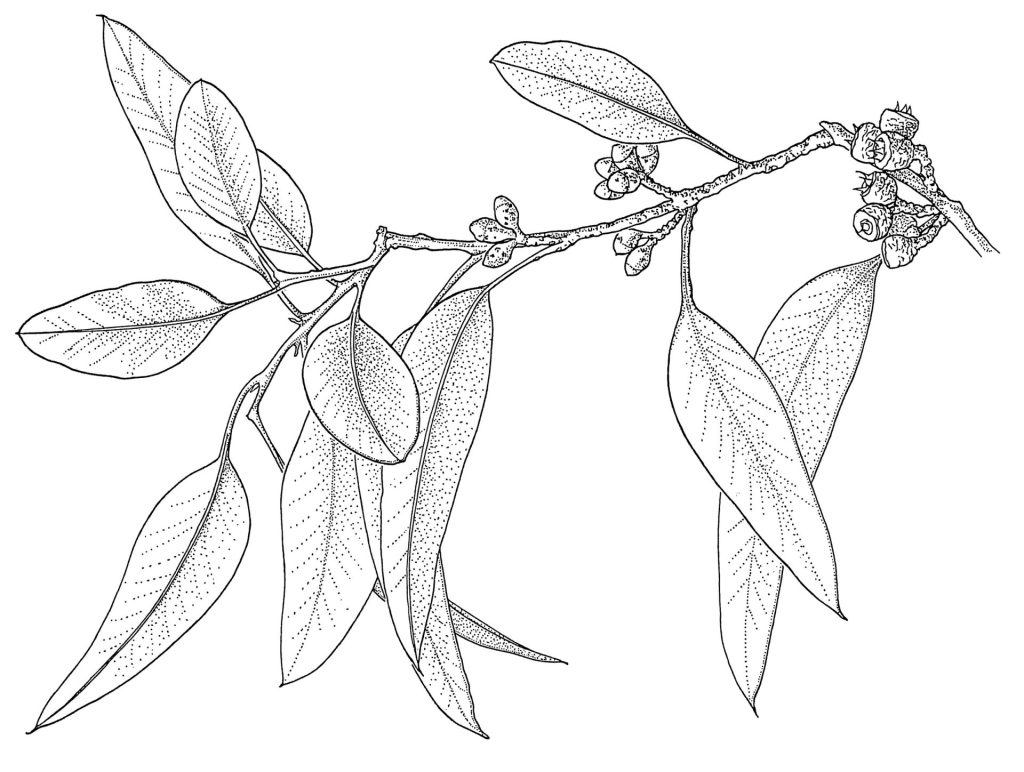
- Robb Eastman-Densem (University of Melbourne, Australia) Generating a new genomic resource for Eucalyptus subseries Subexsertae (tropical red gums) to improve phylogeographic and systematic investigation